
Policy and advocacy work for safe and welcoming streets in Scotland
We campaign for better policies for walking and wheeling to help create safer and more welcoming streets in Scotland.
We call for action on footway parking and for more 20mph speed limits in places where we live, work and go to school. An overview of our work on pavement parking, 20mph speed limits, 20-minute neighbourhoods and inclusive design is below.

The Power of Walking: A Walking and Wheeling Manifesto for 2026
Living Streets has joined with Walking Scotland ahead of the May 2026 Holyrood elections to call on all parties to take meaningful action to make Scotland a walking and wheeling nation. The manifesto sets out how walking can help to tackle some of Scotland’s biggest policy challenges, from improving public health to cutting emissions and reaching climate goals, boosting local economies and reducing inequality.
The manifesto calls on all parties to commit to four key steps that will support Scotland in becoming a walking and wheeling nation. Together, these four measures would shift Scotland towards healthier, low‑carbon travel, strengthen public health objectives, and reduce inequalities.
Step 1: Put walking and wheeling at the heart of government
Step 2: Invest in Walking and Wheeling
Step 3: Prioritise walking and wheeling in communities
Step 4: Improve safety for walking and wheeling
Download the manifesto and take action here.

Pavement parking
Scotland made history in 2019 by introducing a nationwide ban on pavement parking which came into force on 11 December 2023. This milestone reflects years of Living Streets Scotland's campaigning alongside partners and our supporters.
The ban is a crucial step for disabled people, families with pushchairs, older people and other vulnerable people, who were previously forced into oncoming traffic when faced with vehicles bocking their path. It also has the potential to offer savings to cash-strapped councils currently faced with fixing footways damaged by vehicles parking on them.
Since 11 December 2023, local authorities have had the power to enforce the pavement parking ban, with drivers facing fines up to £100 for parking on the pavement. The rules are applied universally across Scotland, although councils can grant exemptions in specific locations under certain circumstances. Despite the ban coming into force in December 2023, enforcement has been inconsistent across Scotland. Walking Scotland’s Scottish Walking and Wheeling Survey found an increase in the number of people experiencing cars parked on the pavement in 2025 compared with 2023 (54% compared to 43%). However, in areas where the ban has been consistently enforced, there has been a positive impact.
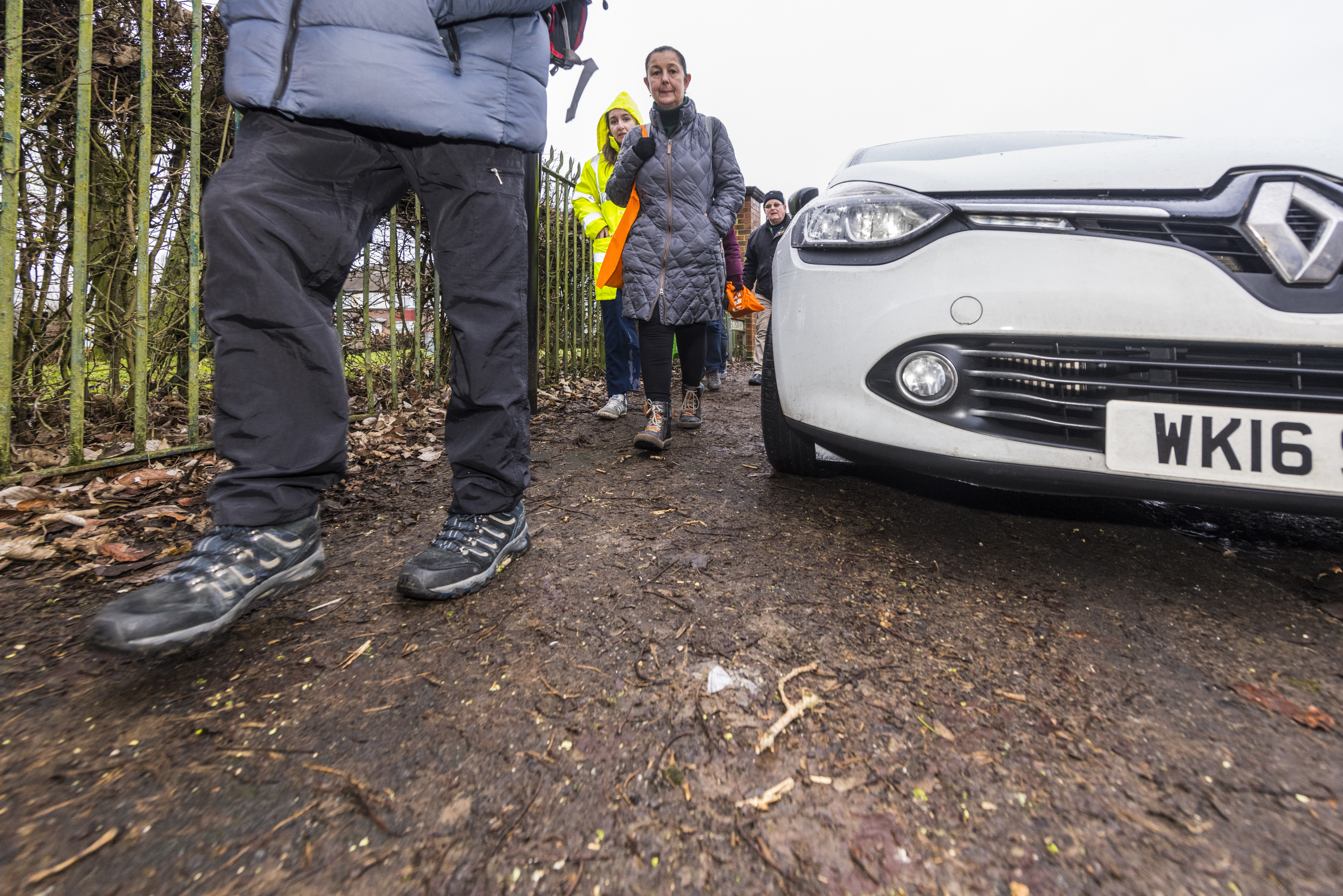
In Edinburgh for example, there was a reduction in the number of Penalty Charge Notices (PCNs) issued for pavement parking from 2024 to 2025 (from 5098 to 4369), and a noticeable reduction in cars being parked on the pavement in general according to Transport and Environment Convener, Councillor Stephen Jenkins. In Ayrshire, where the ban has been implemented and enforced, the pavement parking ban has made a demonstratable impact on residents’ daily lives. Living Streets spoke to Susanne who moved to Scotland with her son Joseph about the positive impact it has made on their day to day experience. Living Streets would like to see the consistent and full implementation of the pavement parking ban by all local authorities to improve the safety and accessibility of all those who walk and wheel in Scotland.
20mph speed limits
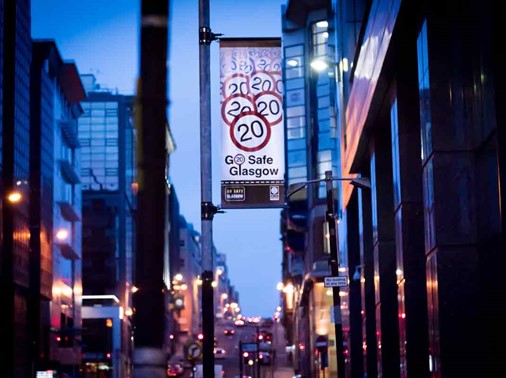
We need more 20mph speed limits to create safer streets, and more vibrant communities where people live, work and shop.
Someone hit at 30mph is nearly five times more likely to die than if they are struck at 30mph.
Increasingly, communities across Scotland are concerned about the speed of traffic in their streets.
Communities like Dunbar in East Lothian have campaigned effectively for a 20mph limit in most of their town, with the local authority who worked with them to make this happen - read more on our communities page.
We have also supported councils such as Edinburgh to make the switch to 20mph, and this has already reduced road casualties.
Wales recently became the first nation in the UK to set a default speed limit of 20mph in residential areas, we want Scotland to follow their lead meeting the commitment to do so by the end of 2025. However, this will need councils and the Scottish Government to work closely together to make the changes needed at community level.
20-minute neighbourhoods
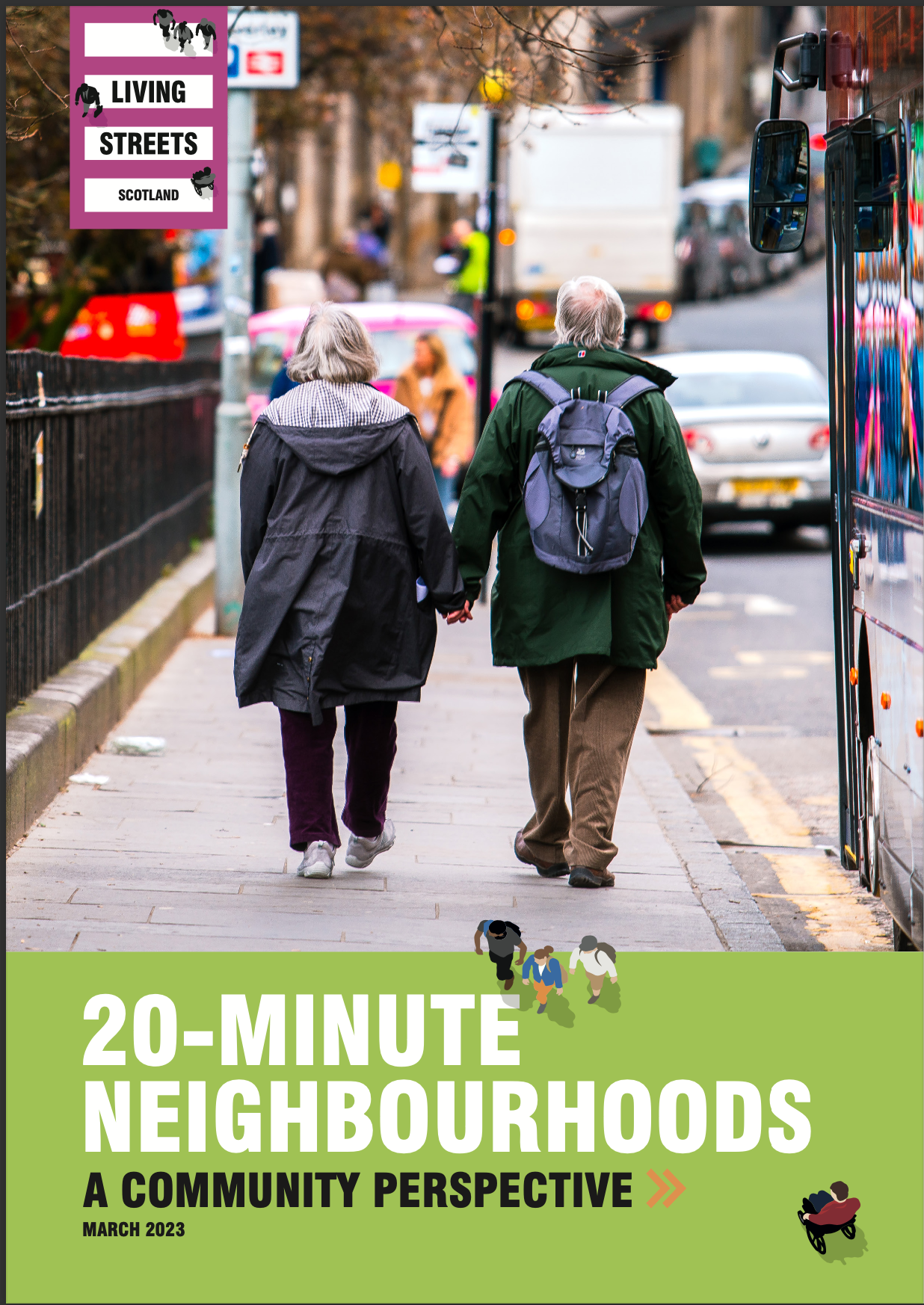
20-minute neighbourhoods are neighbourhoods where people can find most of their daily and weekly needs within a short walk of their home, and readily available public transport to reach the rest.
Scottish Government has made this approach a priority in their proposed new National Planning Framework, and it is being put in place in different ways across the world.
We worked on a Scottish Government funded project in North Lanarkshire, Stirling and Dunblane to develop plans for how specific neighbourhoods could move towards becoming 20-minute neighbourhoods. We looked at what people want, why they do and don’t want certain activities locally, and what would need to change.
Safe and inclusive street design
Living Streets secured funding from Transport Scotland and the Department for Transport to study changes to streets associated with new active travel infrastructure.
The research project saw us working with highway authorities, road users, disabled people and the organisations that represent them to consider how well existing guidance works for different road users and provide advice on where it can be strengthened to help meet everyone’s needs.
The reports were released in April 2024 and can be seen here.