
Walking gives us uninterrupted time to talk, notice things together and feel connected
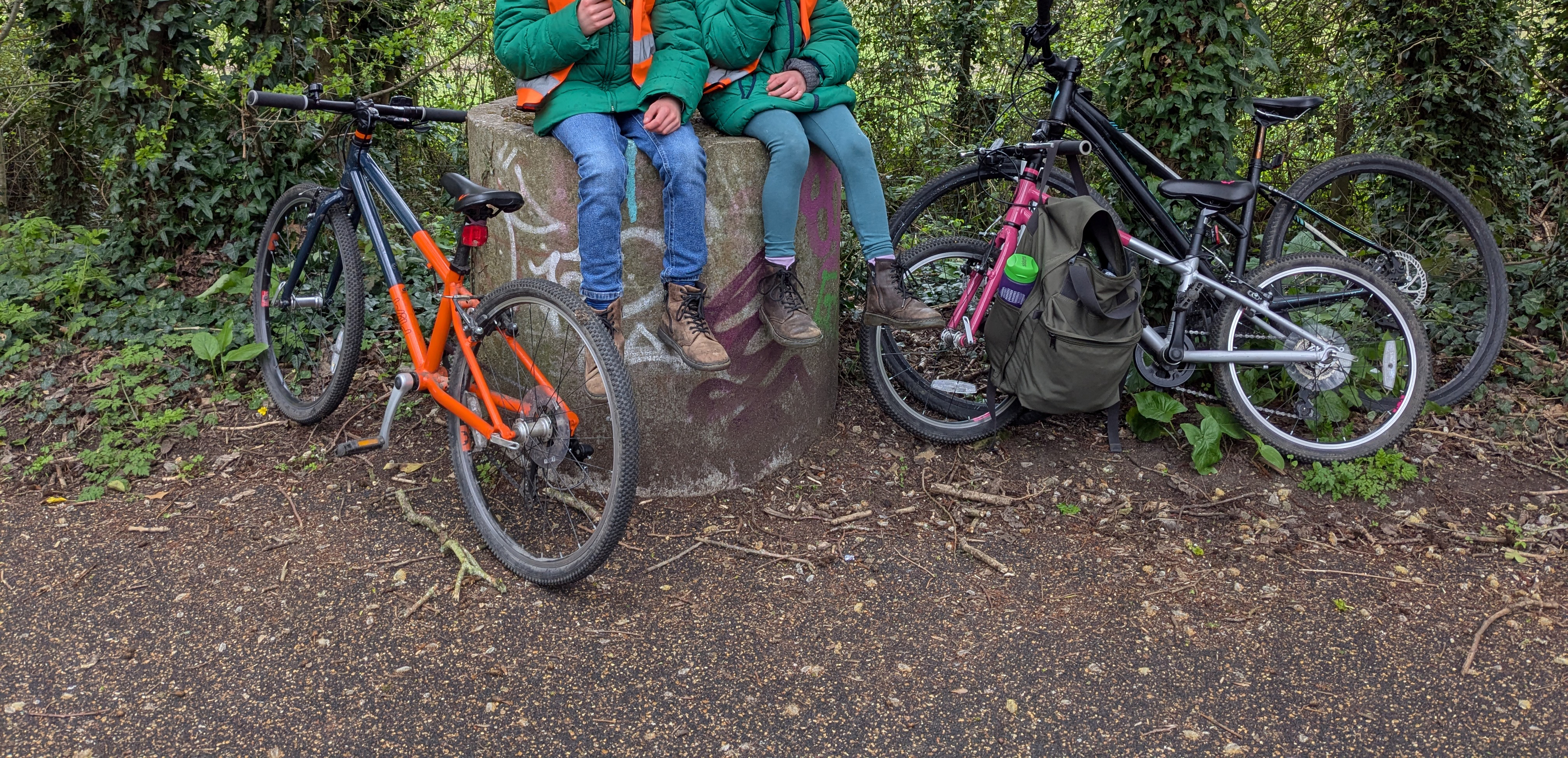
For Lucinda and her family, walking and wheeling is essential. Photo credit: Lucinda Brocklehurst
We know that walking is one of the best ways to travel to school, but walking or wheeling isn't always as easy as it should be. Our parent and carer survey hopes to find out more about their experiences of travelling to school.
For Lucinda Brocklehurst in Gloucestershire, walking and wheeling is not only important to her and her family; it's essential. We spoke to Lucinda and learned why the ability to walk and wheel safely and independently is crucial to her family’s everyday life and the many benefits it brings to their health and wellbeing.
Family time, independence and nature are the things that are most important to me. I currently can’t drive due to epilepsy, so walking and cycling allows me and my children to travel to work and access local services without relying on others or having to spend money on public transport. I have always prioritised getting around on foot, but losing the ability to drive has fundamentally changed how we function as a family.
Unfortunately, there are many barriers to walking and wheeling in my local area. Speeding vehicles, poor visibility and pavement obstructions are obstacles that we face daily. I have taught my children road safety so that they can assess whether drivers can see them, whether vehicles may move and where they can step safely. Those are useful skills, but children should not need to risk-assess every local journey they make.
Pavement parking is also common in our village. As an able-bodied family, we are sometimes forced into the road or through very narrow spaces, but the same obstruction could make a route completely inaccessible to someone using a wheelchair, mobility aid or pushchair.
When the route is safe, walking supports my children to regulate, communicate and become more independent. As home-educated children, they also learn through their surroundings, whether that’s noticing wildlife, changes in the weather, the buildings around them or how people in their community connect with each other. However, unsafe conditions change this, and the priority shifts to concentrating on vehicles, obstructions and safety instructions instead of enjoying their surroundings. Pedestrian routes are essential infrastructure for walking and wheeling and should be treated this way.
My driving restriction has reinforced the importance of walking in my daily life. Not only has it allowed me and my family to travel for work and community activities independently, but it has given us uninterrupted time to talk, notice things together and feel connected to our village.
Unlike a car, where your child sits behind you and is out of direct view, walking and cycling gives us the opportunity to be present, hold hands, and pedal beside one another. Walking and wheeling forces you to slow down, in a good way.