
Brits raise concerns about delivery robots on pavements
Delivery robots are popping up on streets nationwide, but a new poll shows that four in five Brits believe they could cause problems for blind people (80%) and pedestrians with mobility issues (79%).
The YouGov poll was commissioned by Living Streets, the UK charity for everyday walking. Sixty per cent of those of those who expressed a view also said that robots should not be allowed on pavements.
In a campaign film released today (Monday 14 September 2026), the charity calls for the robots to be banned from pavements. These devices operate without any explicit laws governing their use – and in some cases, without consent from the local authority.
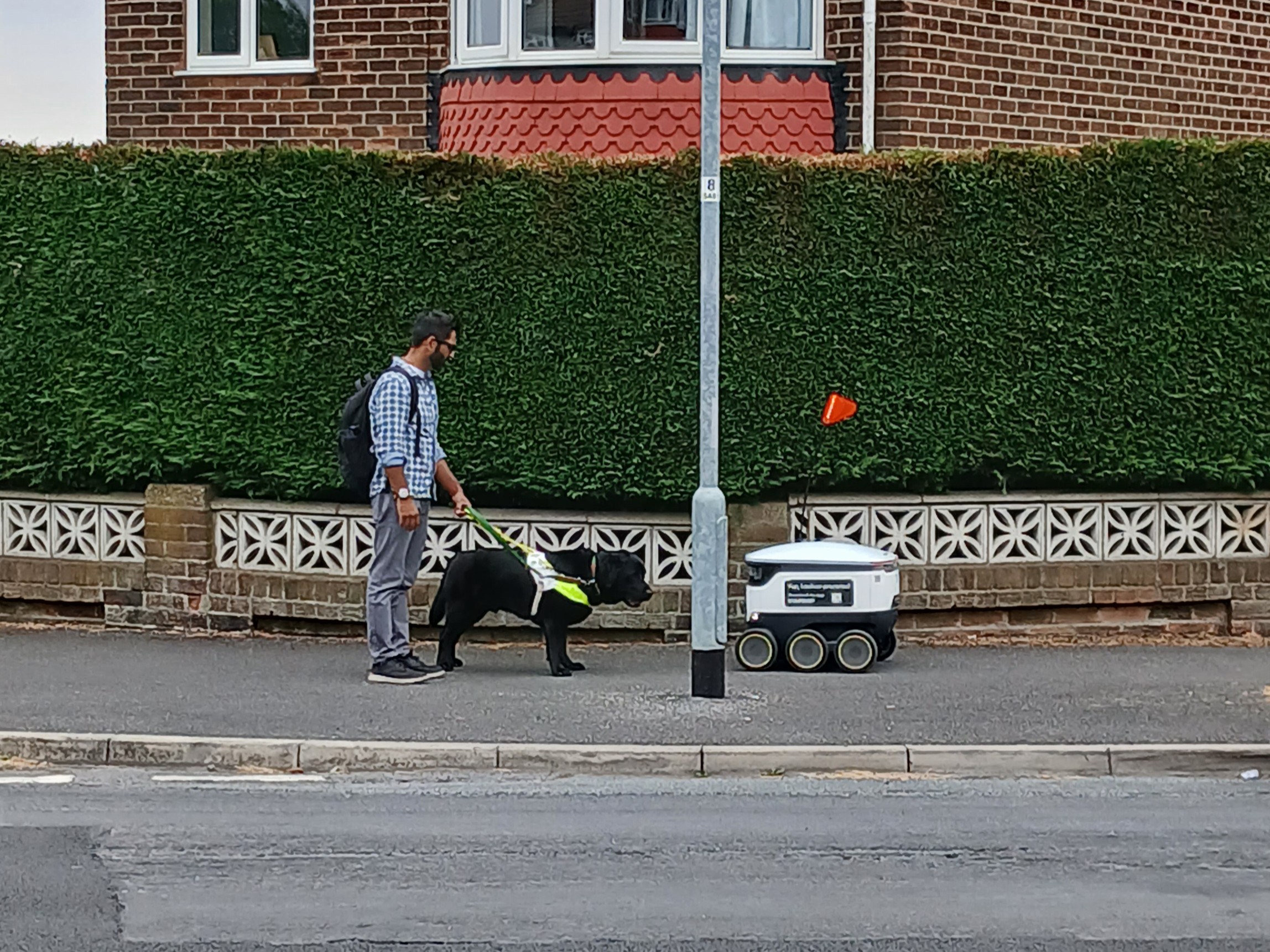
The film highlights how dangerous delivery robots are, especially for people who are blind or have visual impairments, people who use wheelchairs or mobility aids and parents and carers who are walking with a pushchair or young children.
It features Living Streets trustee and disability campaigner, Dr Amit Patel, who is registered severely sight impaired (blind) having lost his sight overnight in 2013.
Dr Amit Patel said:
“We don’t have the infrastructure for robots to be on our pavements and for people to get around safely at the same time. If you can see, walk or hear, you probably won’t be affected by delivery robots, but for those of us who’ve worked so hard to get our independence back, this is yet another hurdle.
“Some people tell me that it’s easier and safer to jump in a taxi and go to an out-of-town shopping centre than it is to visit their local high street because it’s just not safe. If we want to boost our local economies, we need to fix the legislation around delivery robots.”
In June, Living Streets launched its Pavement Overload campaign to highlight the problems caused by delivery robots in UK cities like Leeds, Reading, Cambridge and Bristol.
In an open letter to the Secretary of State for Transport, Rt Hon Heidi Alexander MP, Living Streets asked for clarification on the legality of delivery robots and urged national regulations. The Government has since responded to say it intends to create a legal framework for the further role out of these robots. Meanwhile, the unofficial trials of these robots continue, often without meaningful engagement with local communities.
Tanya Braun, Director of External Affairs at Living Streets, said:
“Our pavements are not for sale and should be for people. Delivery robots are putting pedestrians at risk and creating accessibility issues. The companies operating autonomous delivery robots in the UK are doing so within a legal grey area. They haven’t consulted with local communities who have legitimate concerns, as this new data shows.
“It’s concerning that these companies are selling a vision that you don’t need to leave your front door, that you’re better off and safer inside. Our pavements should be safe and accessible for everybody to walk and wheel. We need action now to make sure that delivery robots don’t force vulnerable members of society into isolation.”
Ben Foley, Campaigns and Policy Lead at Wheels for Wellbeing, and a wheelchair user, said:
"For many people who use wheelchairs, tricycles, and mobility scooters to get around, too often there isn't enough unobstructed width on the pavement.
“In some places pavement robots already create extra obstructions, as they try to get down pavements where there isn't enough width for a wheelchair user to go the other way. If they are introduced more widely, there's a real danger that large numbers of Disabled people will have our routes blocked, stopping us from getting to the bus stop, the local shops, our GP surgery, from taking our children to school, commuting, or making other journeys we need to."
Living Streets wants to see autonomous delivery robots stop operating while there is no clear regulation and legislation and calls on the Government to take immediate steps to ban the robots currently in operation. It is also making representations to Government for them not to proceed with legislation that allows them to operate legally on our streets under new proposed trials.
To find out more about Pavement Overload, the campaign to reclaim Britain’s pavements from robots – and to write to your MP – visit pavementoverload.com
About the author
Sarah Philpott
Strategic Communications Manager, Living Streets / [email protected]