
Walking to school
WHAT WE SAY
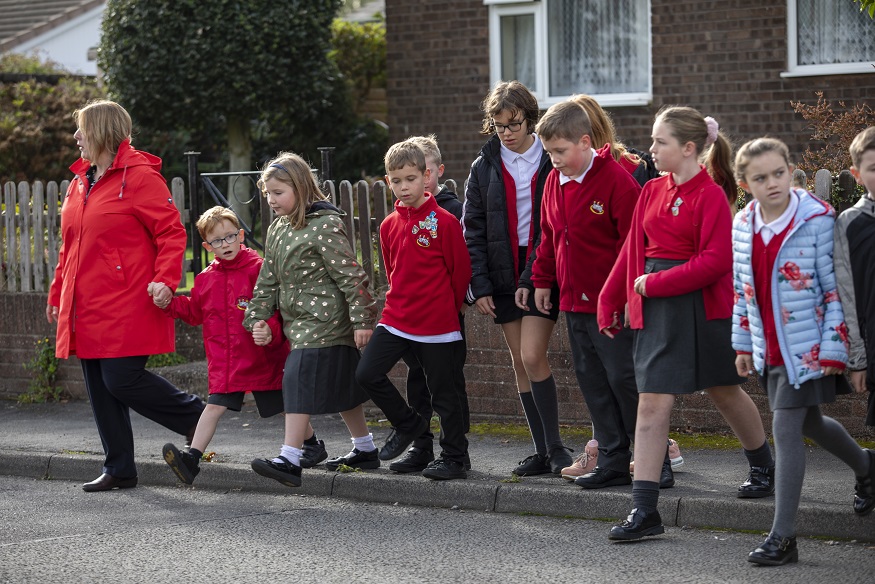
Walking to school is good for children’s health and the environment.
We know that parents see the benefits of walking to school, including improvements in mood and behaviour in their children.
From reduced congestion to higher footfall for local businesses, the whole community benefits when more children walk to school.
However, the number of children walking has been in decline for decades.

WHAT WE WANT
Living Streets wants children who can walk or wheel to school to be able to do so on safe and accessible streets.
The government has a target that at least 60% of children in England should be walking to school by 2035.
To help make this happen we want to see our Walk to School programme rolled out to the whole country.
The view from the school run
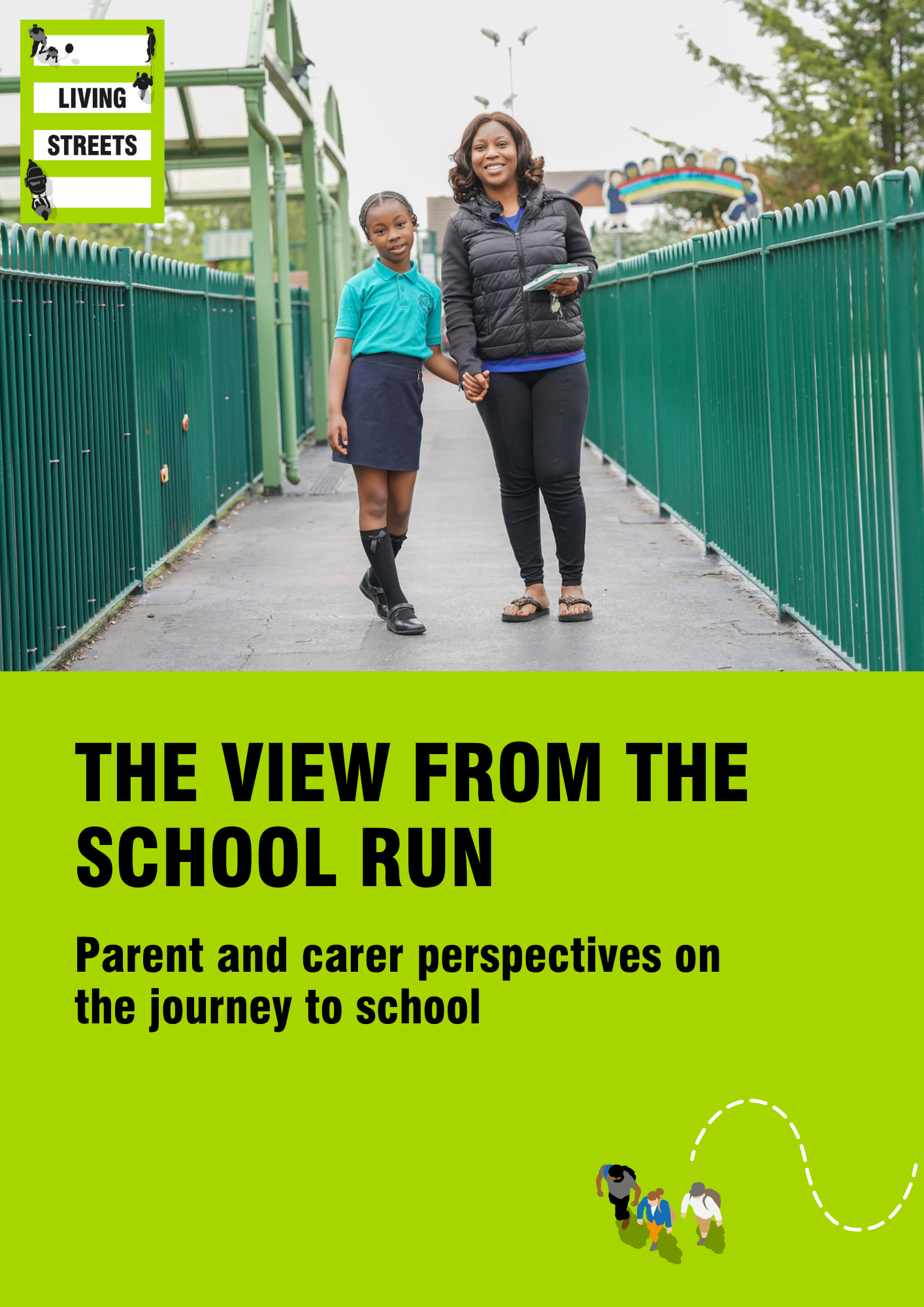
'The view from the school run' is based on a survey exploring how families travel to school, the factors influencing travel choices, barriers to active travel, and priorities for improving the school journey.
This report presents findings from a survey of 1,634 parents and carers representing 120 local authorities across the UK. The survey explored how families travel to school, the factors influencing travel choices, barriers to active travel and priorities for improving the school journey. It gives us a snapshot of how families across the UK experience the school run.
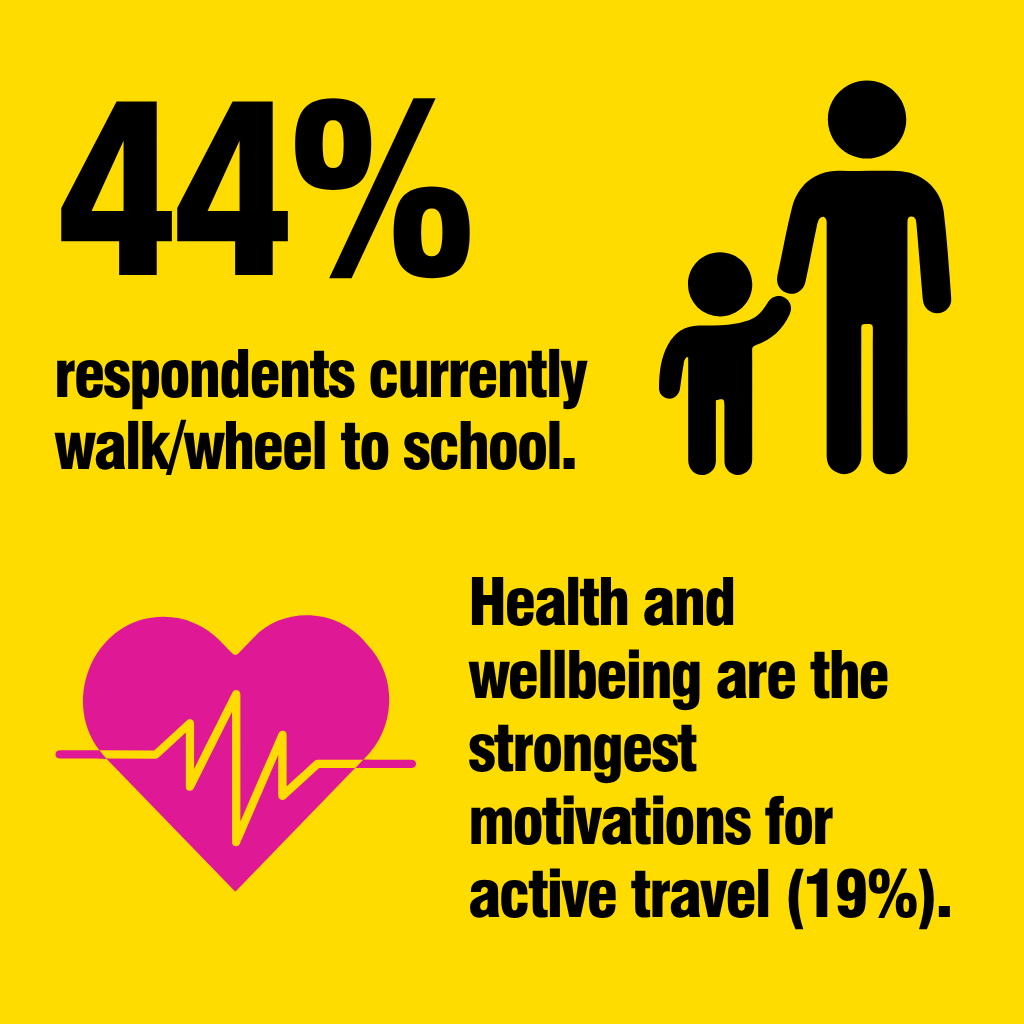
The findings suggest that parents recognise a wide range of benefits associated with active travel. Health and wellbeing emerged as the strongest motivation, while spending time outdoors, supporting children's independence and opportunities for family connection were also frequently cited.
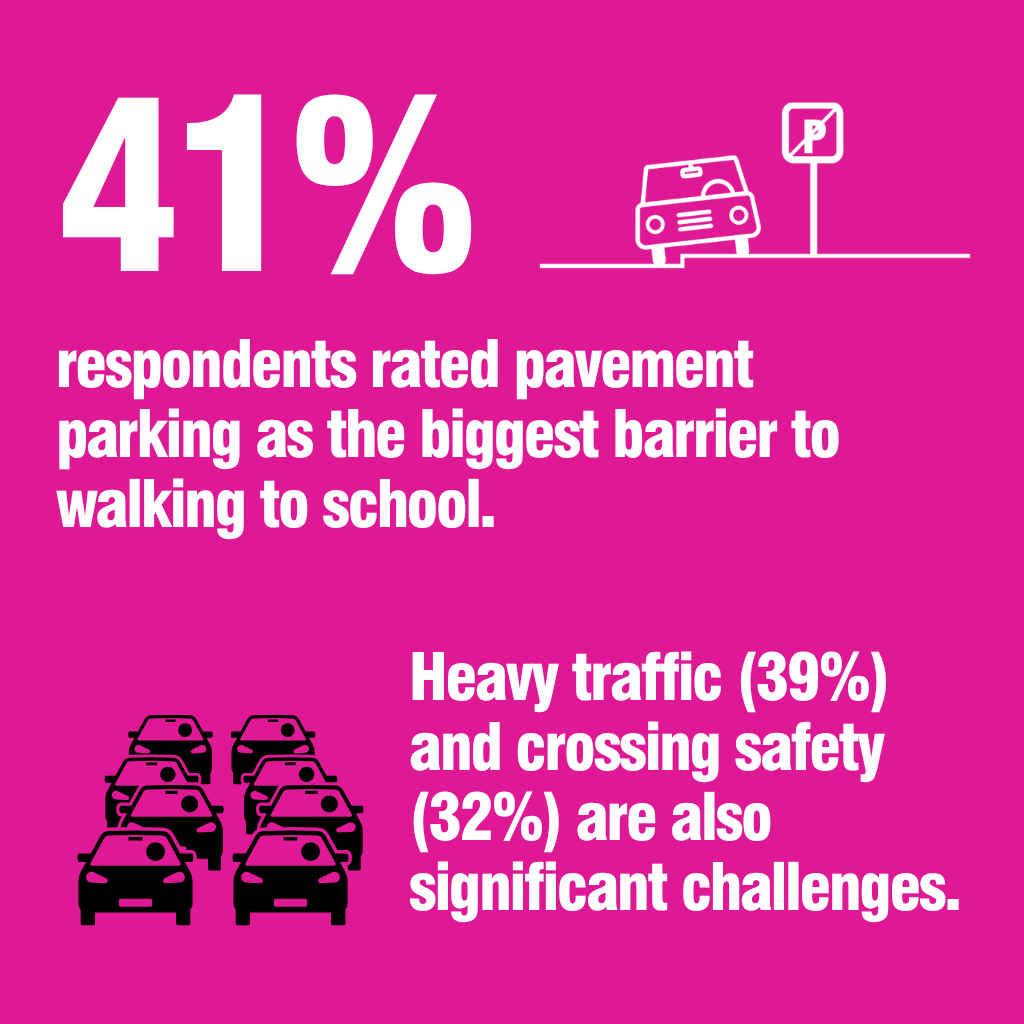
Despite these benefits, concerns relating to traffic, parking and road safety continue to shape travel choices. Parents consistently identified traffic volumes, pavement parking and unsafe crossing points as significant barriers to walking and wheeling.
Take part in this year's parents and carers survey here.
Key findings
Policy Recommendations
The survey points towards several considerations for policymakers, local authorities, schools and practitioners.
-
Prioritise a holistic approach to road safety across the whole route to school combining lower speeds, safer and more crossings, and traffic reduction measures to increase the safety of journeys from start to finish.
-
Tackle pavement parking through bans rolled out across as many local authorities as possible.
-
Embed accessibility in planning by removing barriers and obstructions like EV charging points, improving pavements and dropped kerbs, and designing streets to be inclusive.
-
Improve walking and wheeling routes with wider pavements, better surfaces, improved lighting, clear wayfinding and safer crossings and junctions.
-
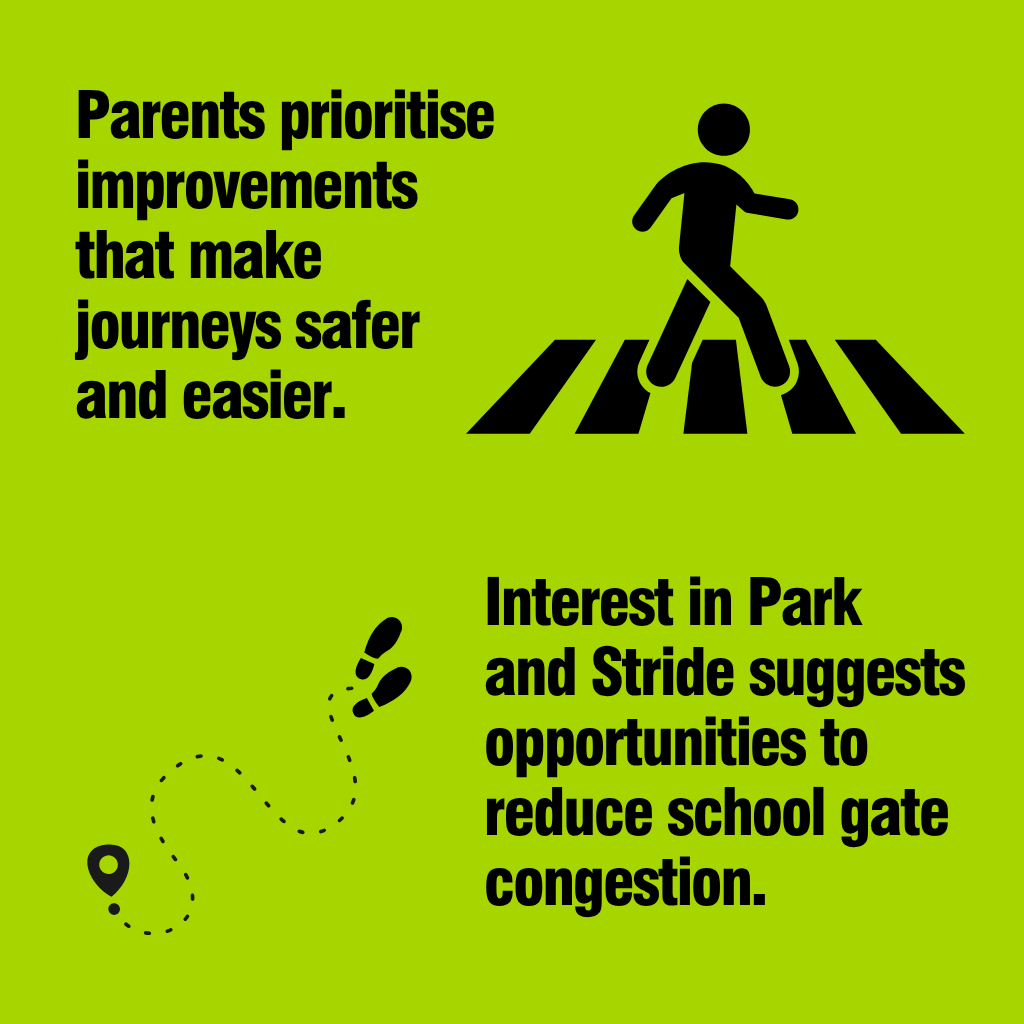
Expand Park and Stride schemes to provide families with flexible alternatives to driving all the way to the school gate.
-
Recognise active travel as a public health intervention that supports physical activity, mental wellbeing and healthier lifestyles.
-
Adopt a whole system approach to school travel by aligning transport, planning, education and public health policies to meet the flexible needs of different families.
Swap the school run for a school walk
We need urgent action on air pollution to protect and promote the Walk to School. And yet, at the same time, the Walk to School could play such a big part in improving our air quality.
Our report Swap The School Run For The School Walk lays out 21 recommendations for decision-makers at all levels to enable more children to walk to and from school.

Did you know?
74%
Estimate of primary school children who walked to school in 1975-76
50%
of children aged 5 to 10 currently walk to school
60%
UK Government target of children aged 5 to 10 walking to school by 2035.
FAQs
What about children whose schools are too far away to walk?
We've got that covered! 'Park and Stride' is a simple idea for families who live far away, to enjoy the benefits of walking to school. If you have to drive, park a ten minute walk away.
How do I encourage my school to promote walking to school?
WOW - our walk to school challenge can help. WOW typically sees walking rates increase by 23% with a 30% reduction in cars at the school gates.
Schools love taking part, walking or wheeling to school and winning badges. Find out more.
What if the walking route to school isn't safe?
The health benefits of walking always outweigh the risks. But if you want to make the walk to school safer you can encourage your local council to introduce and enforce 20mph zones. Some schools are working with local authorities to close their streets to traffic to make them even safer.