
There should be no acceptable losses on our roads

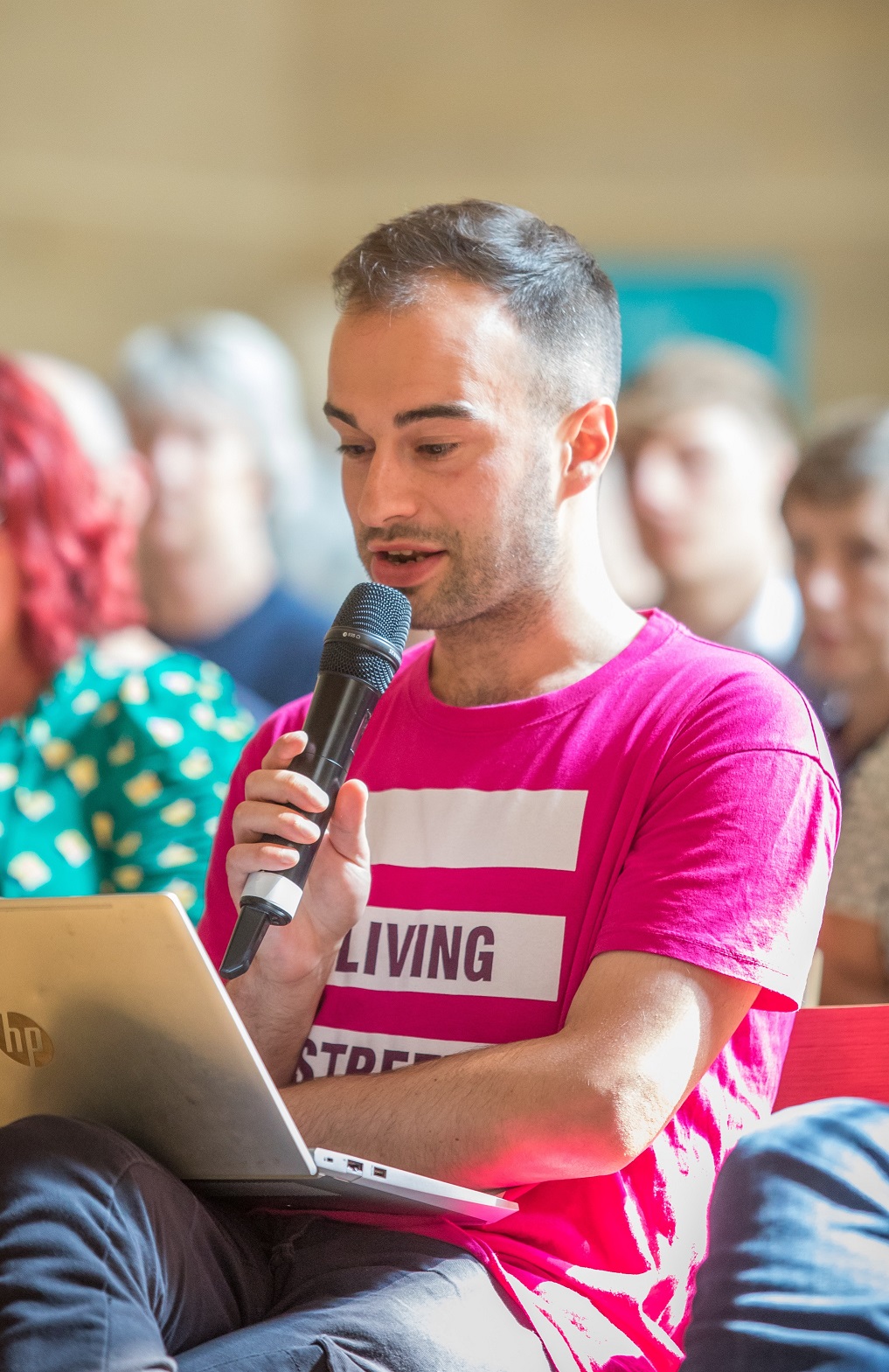
On 24 June, our Campaigns and Public Affairs Coordinator Zak Viney provided evidence to the Transport Select Committee, scrutinising the UK Government’s Road Safety Strategy for England, which was published in January 2026.
Why is this important?
The Transport Select Committee scrutinises the work of the Department for Transport (DfT) and is made up of cross-party MPs, chaired by Ruth Cadbury, MP for Brentford and Isleworth.
Living Streets was invited to contribute to an oral evidence session to discuss how infrastructure can be used to reduce road danger. Zak's testimony will inform recommendations the committee make to the DfT on what the Strategy does well, and where it can be improved.
Here’s what Zak said.
Is the Strategy ambitious? Yes and no.
Living Streets and The Bikeability Trust released a report, Safer Streets for All, in May 2025 to influence England’s Road Safety Strategy. Within Safer Streets for All, we called for adoption of Vision Zero targets and to the strategy around a Safe Systems approach.
The Strategy we saw delivered targets to reduce those killed or seriously injured on our roads by 65% by 2025, extending to 70% for children. This is an aspirational target. Between 1975 and 2025, the Netherlands reduced road fatalities by 80% and 95% less among children. Comparing Dutch success over 50-years, it makes our plans over the next 10-years seem indeed ambitious.
However, Living Streets as the UK charity for everyday walking can’t advocate for anything less than a Vision Zero target, where road and roadside fatalities are systematically eliminated by 2050. The UK Strategy, as written, would still see 10,000 people killed and 180,000 seriously injured on our roads by 2035. Anything less than Vision Zero defines a sense of acceptable losses on our roads and roadsides.
Zak also criticised The Strategy with its lack of real emphasis on the need to change the status quo and put the onus of road safety onto street design. The headline policies, such as a minimum learning period for new drivers and combatting drink and drug driving are welcomed, however these measures focus on predominately individual user behaviour rather than infrastructure, speed or safe vehicles.
Cultural change is needed
Motor traffic is estimated to grow by up to 54% by 2060, and with this dominance on our streets, it is no wonder cars are the most common vehicle type involved in fatal collisions – with pedestrians, cyclists and motorcyclists making up half of all road traffic fatalities.
Zak proposed reducing road danger requires radical changes to the way we present motoring, including how speed and motoring is sold. The campaign group Ad Free Cities highlights how car adverts rarely show any people outside of the car, "the erasure from adverts of not only the consequences of driving but the victims of those consequences reinforce the perception that driving is an activity with no downsides." The presentation of motoring also embeds the "family car" narrative, normalising driving children instead of encouraging them to travel actively and independently, but also makes the car seem 'cuddly' and soft.
In Safer Streets for All, we called on regulation to curb the size and weight of private vehicles and measures to encourage councils to introduce higher parking charges for SUVs, as seen in places like Paris, Bath and Islington. This was mentioned within the Strategy; however, the Government could go further to combat ‘carspreading’ by deliver a THINK! campaign highlighting the danger of larger vehicles and providing greater regulation against SUV advertising.
Don’t forget the pavement!
A lot of discourse around highways condition and maintenance is dominated by roads, where the UK Government has provided £7.3 billion for highway maintenance, with dedicated funds focussed on potholes.
But cracked, broken and uneven footways also present a major issue, especially for vulnerable pedestrians.
Our Slips, Trips and Falls report published in 2023 found that 30% of people older than 65 and 50% of people older than 80 fall at least once a year. We estimated this costs the NHS more than £2.3 billion per year. With any declining condition of our pavements there is an increased risk of pedestrian trips and falls.
This begs the question – is footway maintenance being given the priority it deserves? Living Streets advocates that to deliver both safe roads and safe roadsides pavement maintenance is given equal priority to carriageways.
Accessibility, or the lack thereof
Disabled people are five times more likely to be injured as a pedestrian than non-disabled people, reporting 22 motor vehicle injuries per million miles walked, compared to 4.8 among non-disabled pedestrians.
We know that obstructed pavements are a significant barrier to walking and wheeling, especially amongst disabled people, and Living Streets has campaigned successfully for new pavement parking legislation in England and Scotland. But parked cars are not the only blockage we face on pavements.
Autonomous delivery robots are operating on UK pavements right now, causing chaos for pedestrians and with no explicit laws governing them. For most people, delivery robots are a novelty. For blind and partially sighted people, wheelchair users, and older pedestrians, they are an obstacle, cause danger and create inaccessible pavements. Delivery robots have been banned in North American cities like Chicago, Pittsburgh and Toronto. We've now seeing them operating on public pavements across the UK: in Sheffield, Leeds, Barnsley, Cambridge, Bristol, Milton Keynes and beyond.
They do so without any national regulatory framework and, in some cases, without consent from the local authority or local communities.
In the Transport Committee, Zak called on clarification on whether current operations are lawful and for delivery robots to be excluded from upcoming micromobility regulations.
About the author
Zak Viney
Campaigns & Public Affairs Coordinator, Living Streets
[email protected]