
Side road zebras - an opportunity for Wales
On Monday 15 December, The Welsh Government closed a four-week consultation, asking for views on proposed changes to legislation will provide local authorities with the option of installing a side road zebra crossing at junctions. This is great news for walking in Wales. Ruth Billingham, our Head of Campaigns & Public Affairs, dives into the detail of what this means for walking.

This proposed legislation would be a first for the UK – giving pedestrians more priority at side streets and supporting people to walk and wheel more. But as is often the case, the devil is in the detail and we want to ensure that the legislation and guidance to local authorities takes everything into account – so our streets really are safer for walking and wheeling for all.
What is a side road zebra?
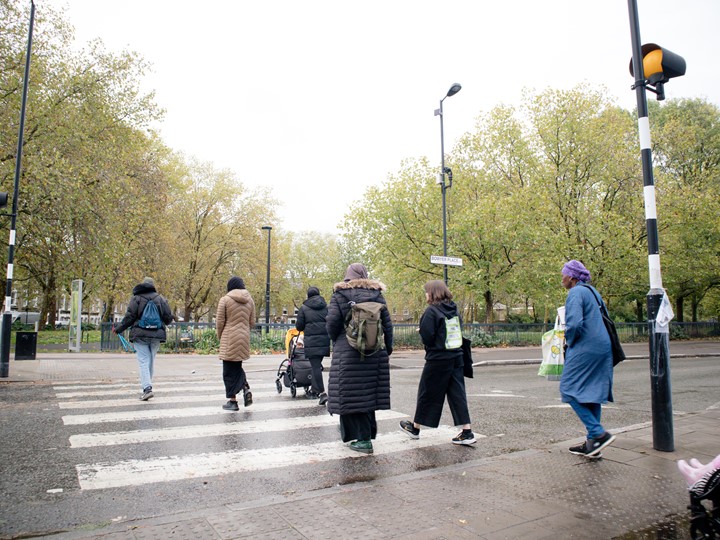
A side road zebra crossing uses black and white zebra markings and give way lines but does not have the other features of the crossings people are more used to such as Belisha beacons or zig zag markings. Side road zebra crossings can therefore be installed on the pedestrian’s desired walking line, directly across the mouth of the junction.
Whilst the revised Highway Code of January 2022 instructs vehicle drivers and riders that they should give way to people when turning in or out of sideroads, this is not currently enforced and relies largely on driver courtesy. With the introduction of the proposed simple zebra crossings, it will become mandatory for vehicles to stop to give priority to people crossing in the same way as with controlled crossings.
Where are they currently used?
Side road zebras are commonly used in other countries, and trials have been carried out across the UK: in Manchester, Cardiff, Warwick University Campus and Westminster.
The 2023 Cardiff trial found that side road zebra sites demonstrated a significant increase in drivers giving way to pedestrians than without the crossing and found no evidence that using a simplified crossing would have a significantly greater risk than one which used the full range of features
What is proposed in Wales?
The Welsh Government has proposed to modify legislation to make the provision for highway authorities to introduce simple zebra crossings across the mouths of side roads where the speed limit on both the main and side road is 20mph. The proposal does not impose any requirement upon them to do so, and the Welsh Government will publish accompanying guidance for highway authorities on where, how and when to use these crossings.
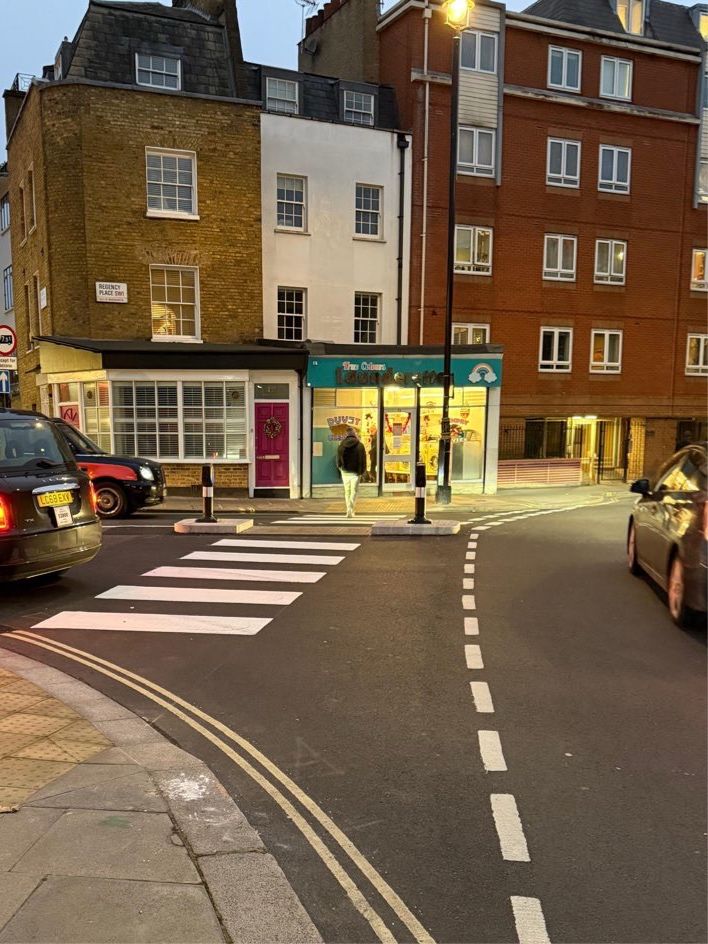
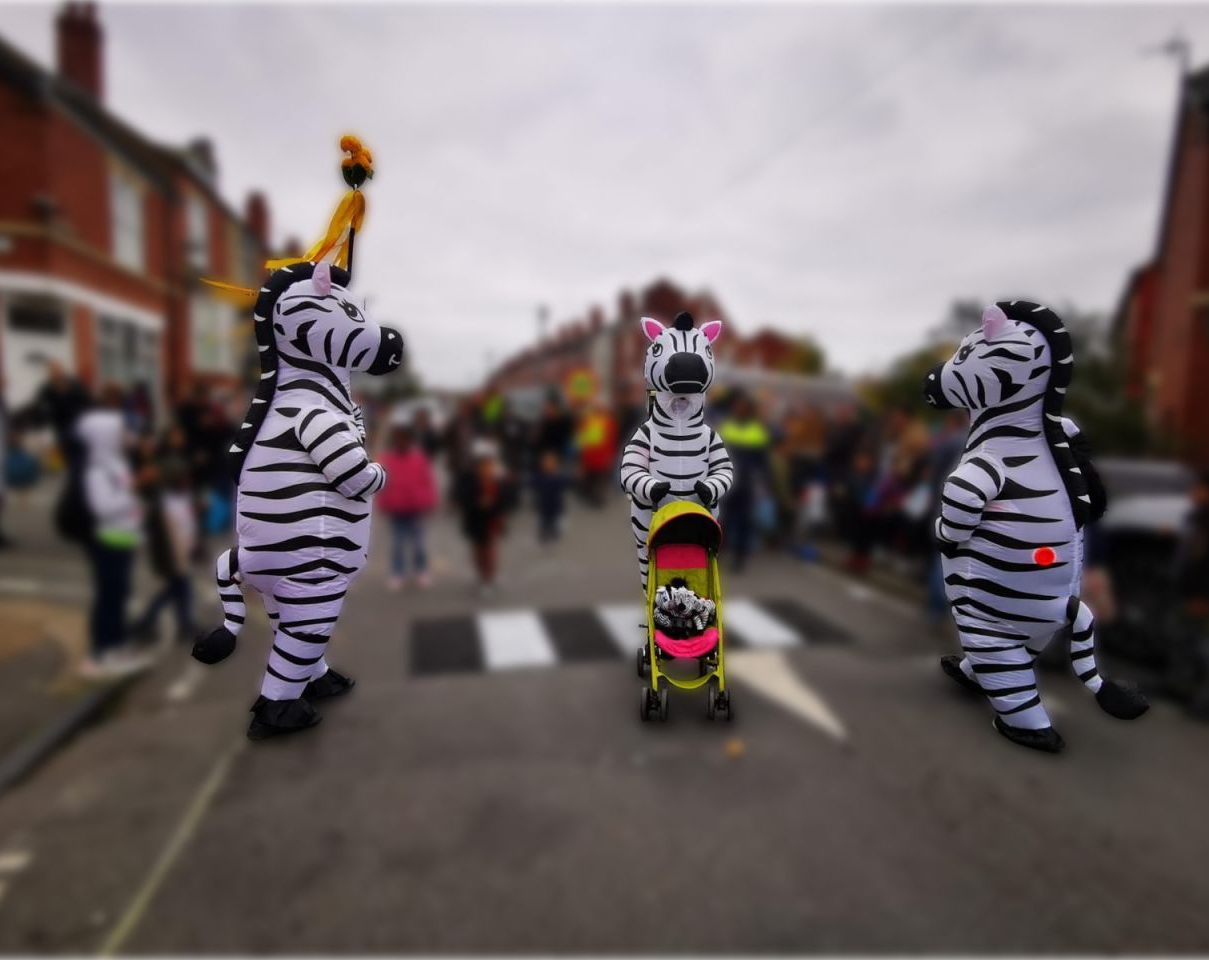
Credit: Adam Tranter
WHAT WE THINK
Pedestrian Safety
We agree that painting zebra crossings on side roads is shown to significantly improve drivers giving way to pedestrians. This makes it much easier for people to find a gap to walk across these junctions.
Side road zebras will help to underline the Highway Code changes, to give priority to pedestrians at side roads. We welcome this, but we cannot conclusively affirm side road zebras will increase safety. It should be remembered that crossings in general are not safety features but help pedestrians to get a gap in vehicle traffic to cross the road. Indeed, many pedestrian injuries and deaths happen at crossings, usually due to unsafe vehicle speed on the approaching road.
Enabling everyday walking and wheeling
YouGov polling data, commissioned by Living Streets in 2021 found that 83% of adults would feel more confident crossing the road with zebra markings and 76% of parents said that zebra markings at side roads would mean they would be more likely to walk their children walk to school.
This, aside findings other studies do suggest the perception of safety may be increased, which may reduce barriers to walking and enable these journeys.
We agree that implementation of side road zebras should reduce the wait time for pedestrians when crossing side roads; as well as removal of the additional expense of installing and maintaining ‘Belisha beacons’ will make this a cost-effective option for highways authorities.
Concerns
A ‘sticking plaster’ measure in isolation
Robust guidance is required to ensure side road zebras are applied on suitable junctions, as without inappropriate use of these crossings as a ‘sticking plaster’ measure on wide or busy junctions.
While side road zebras can be part of improving pedestrian conditions at junctions, for them to be effective it is important to address the main risks from traffic. We recommend using metrics of traffic volume and junction width to direct local authorities to focus on improving these aspects before adding zebra markings.
Volume of motor traffic turning in and out of a side road junction is a significant factor in how safe and comfortable it will be for pedestrians. We would recommend having a maximum traffic volume limit for locations with side road zebras.
Width of junction mouth and carriageway is also significant as it influences vehicle speed at the corner. In Living Streets’ Inclusive Design research, we found treatments at side roads worked best for pedestrians when entrances were narrow, ideally a single lane, and with one direction of vehicle movement at a time.
Reducing carriageway widths at junctions (including considering temporary bolt-down materials) and reducing through-traffic with filters, should be encouraged as ways to meet these requirements and can make more junctions suitable for side road zebras.
We would also encourage guidance that side road zebras should normally only be used at the junction of a minor road with a more major one, and not at junctions of two minor roads. It should not be necessary to have zebra markings on the many minor junctions within sets of residential streets.
Accessibility for all
Side road zebras should not be treated as an alternative to light-controlled crossings or prescribed zebra crossings.
Drivers must give way to pedestrians on those crossings, whereas a courtesy crossing relies on goodwill and communication between the driver and pedestrian. Negotiation between road users is primarily achieved through visual communication such as, the exchange of looks and gestures.
Eye contact is impossible for people who have little or no useful sight. As well as missing cues from vehicle drivers or riders, blind people may inadvertently give the wrong message to other road users. Reliance on visual communication may also prove challenging when children are present or for people with neurodevelopment disorders.
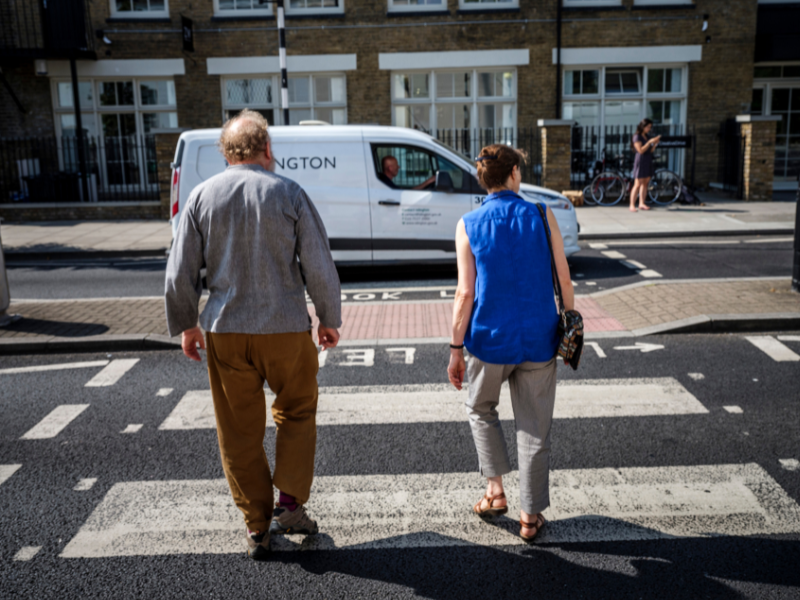
The introduction of side road zebras will underline pedestrian priority and support people to walk and wheel more in their community. Robust guidance must be in place for local authorities to ensure side road zebras are considered as part of the solution to develop neighbourhoods for people. If side road zebras are in the right place, alongside wider measures to create more walkable neighbourhoods, we see great benefit to this proposal. We also hope that side road zebras will be adopted in other parts of the UK. City leaders in Sheffield are also working to roll out these crossings so more people walking and wheeling see the benefits.
LIKE SIDE ROAD ZEBRAS AND LIVE IN WALES? HAVE YOUR SAY ON OUR SENEDD 2026 ELECTIONS SURVEY