
What does a feminist city look like?
In conversation with Leslie Kern
Leslie Kern, PhD, is the author of Feminist City: Claiming Space in a Man-Made World. She was an associate professor of geography and environment and feminist and gender studies at Mount Allison University, Canada.
Leslie was a key speaker at the 2022 UK Walking Summit and led our COP26 event in Glasgow, looking at how women leaders are transforming street design. You can read her foreword from Walking for Everyone, where she discusses overcoming barriers to create more inclusive streets. She talked to us about urban design, climate change and what a feminist city actually looks.
LK: My work has largely focused on gendered and other inequalities as they are manifested and experienced in urban spaces. I grew up in the suburbs of Toronto and as a young person I was intrigued by the differences between suburban and city life and found myself drawn to the sense of freedom I experienced in the city. I felt like I belonged.
When I had a baby after moving to London, though, I started to question whether the city was really made for me after all. That eventually launched me into a career as a feminist geographer: someone who questions how power relations are produced and reinforced through place.
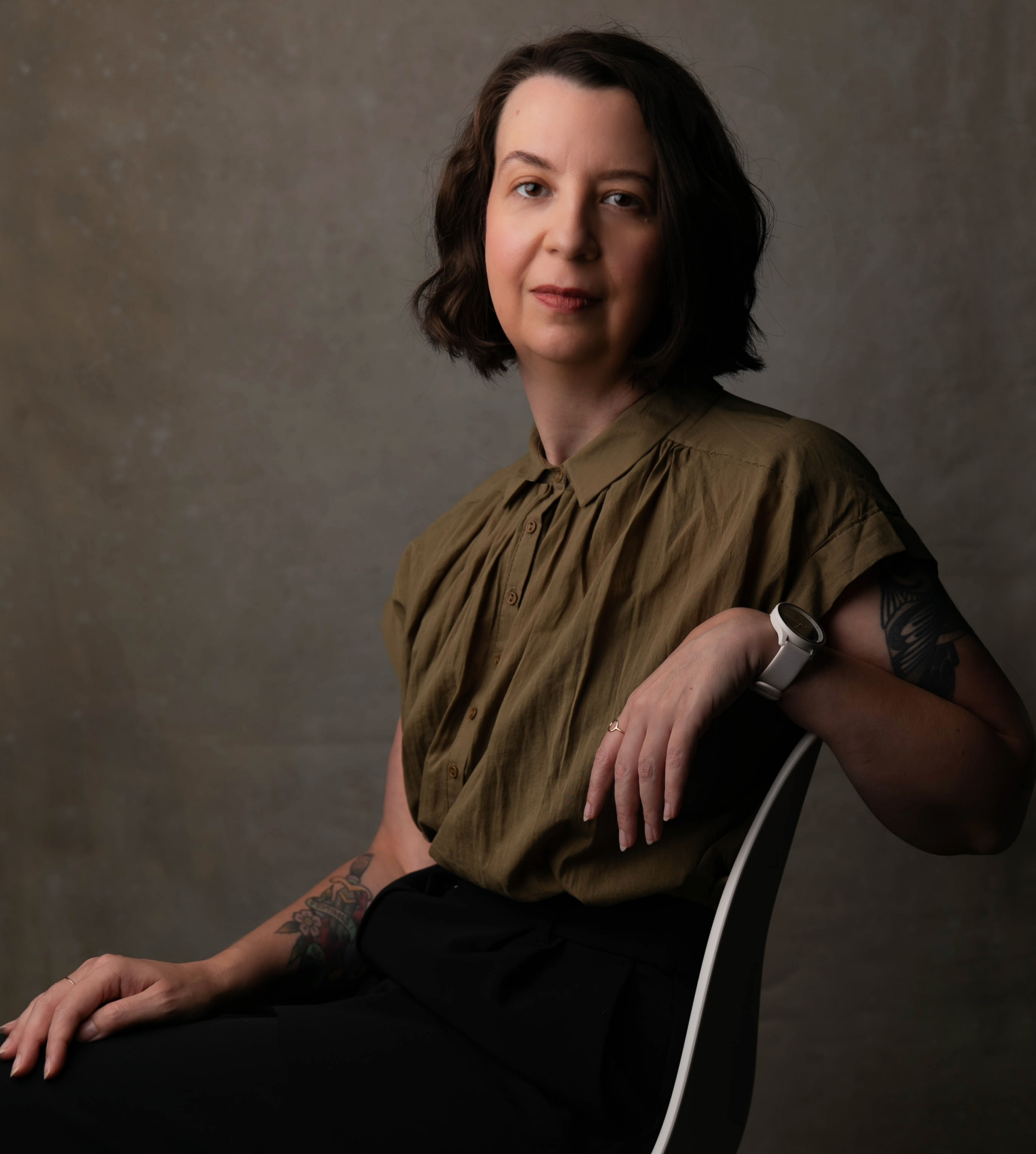
Leslie Kern credit: Nicola Toon
'Projects that limit car use and create more space for walking, cycling, and social activity align closely with feminist visions of the city.'
In your book, Feminist City: Claiming Space in a Man‑Made World, you discuss how the built environment has been largely designed by and for, men with everybody else the exception. What are the implications of this and what barriers does this pose for women navigating the city?
LK: The imagined ideal, or 'typical' user of urban spaces and services has long been a rather niche figure: male, able-bodied, adult but not elderly, cisgender, straight, white, and engaged in paid work. Yet he has been positioned as the default universal standard for design, policy, transportation, safety concerns, and more.
The implication is that everyone who doesn’t fit this narrow ideal faces barriers - physical, social, economic - to accessing, using, and feeling safe and comfortable in cities. Decades of research show that women, particularly as caregivers, encounter systems and infrastructures that don’t account for their needs or experiences. This often leaves them feeling unsafe, time-pressured, or at an economic disadvantage.
Last month, the UK government announced new guidance for councils across the country on how to make streets safer for women and girls, following research showing that nine in ten women feel unsafe walking after dark. In your work, you discuss how such fears carry ‘social, psychological, and economic consequences’ for women and prevent them from living fully independent lives. Could you unpack this idea and explain what these ‘costs of fear’ involve?
LK: Fear is not just a feeling. It shapes behaviour and decision-making in ways that can significantly constrain women’s lives. For example, women often choose travel routes based on safety rather than cost or efficiency, meaning they may spend more time and money just to get around.
Safety concerns also factor into decisions about where to work, live, or study, potentially limiting opportunities for career or educational advancement. In addition, women are expected to engage in a wide range of 'safe' behaviours- sharing their location, travelling in groups, learning self-defence, dressing modestly, and more. These taken-for-granted adaptations are unequal burdens that circumscribe women’s movements, choices, and autonomy.
'Decades of research show that women, particularly as caregivers, encounter systems and infrastructures that don’t account for their needs or experiences.'
You highlight an important issue in your book - that the efforts to make cities feel safer for women, for example, the increased use of CCTV, street lighting and policing, can result in creating environments that are less safe for other marginalised groups. Could you talk about this risk and what it reveals about how we approach urban safety?
LK: There has long been an assumption that we can prevent crime and improve perceptions of safety by 'hardening' the environment, in the belief that cameras, surveillance, bright lights, and a lack of places to gather will keep 'bad actors' away. The problem is that these measures can end up keeping everyone away!
When streets, parks, and public squares sit empty, they can feel even less safe, especially for marginalised groups such as racialised communities or unhoused people, who are often disproportionately targeted in public space. This top-down, control-oriented model of safety overlooks the fact that busy, diverse, multi-use environments are often the ones that feel most safe and inclusive.
You describe a feminist city as one ‘where barriers, physical and social, are dismantled, where all bodies are welcomed and accommodated’, what improvements, innovations or progress have you encountered in your research that go towards creating safer, accessible and more inclusive streets?
LK: Projects that limit car use and create more space for walking, cycling, and social activity align closely with feminist visions of the city. Barcelona’s Superblocks, for example, reclaim space from cars and reorient it toward school mobility, green space, and community use.
Japan’s well-designed and widely available public toilets also contribute to a more inclusive and accessible public realm and are essential to people’s ability to spend time in the city. Many cities are also rethinking underpasses, which are often unwelcoming for women, children, and older adults. In Salford, for instance, one underpass was transformed into a colourful, multi-use space after vehicle traffic was removed, making it more inviting for a wider range of users.
'Ultimately, realising a more inclusive vision for our cities requires diverse leadership and meaningful community participation, particularly from groups that have historically been excluded from planning and design processes.'
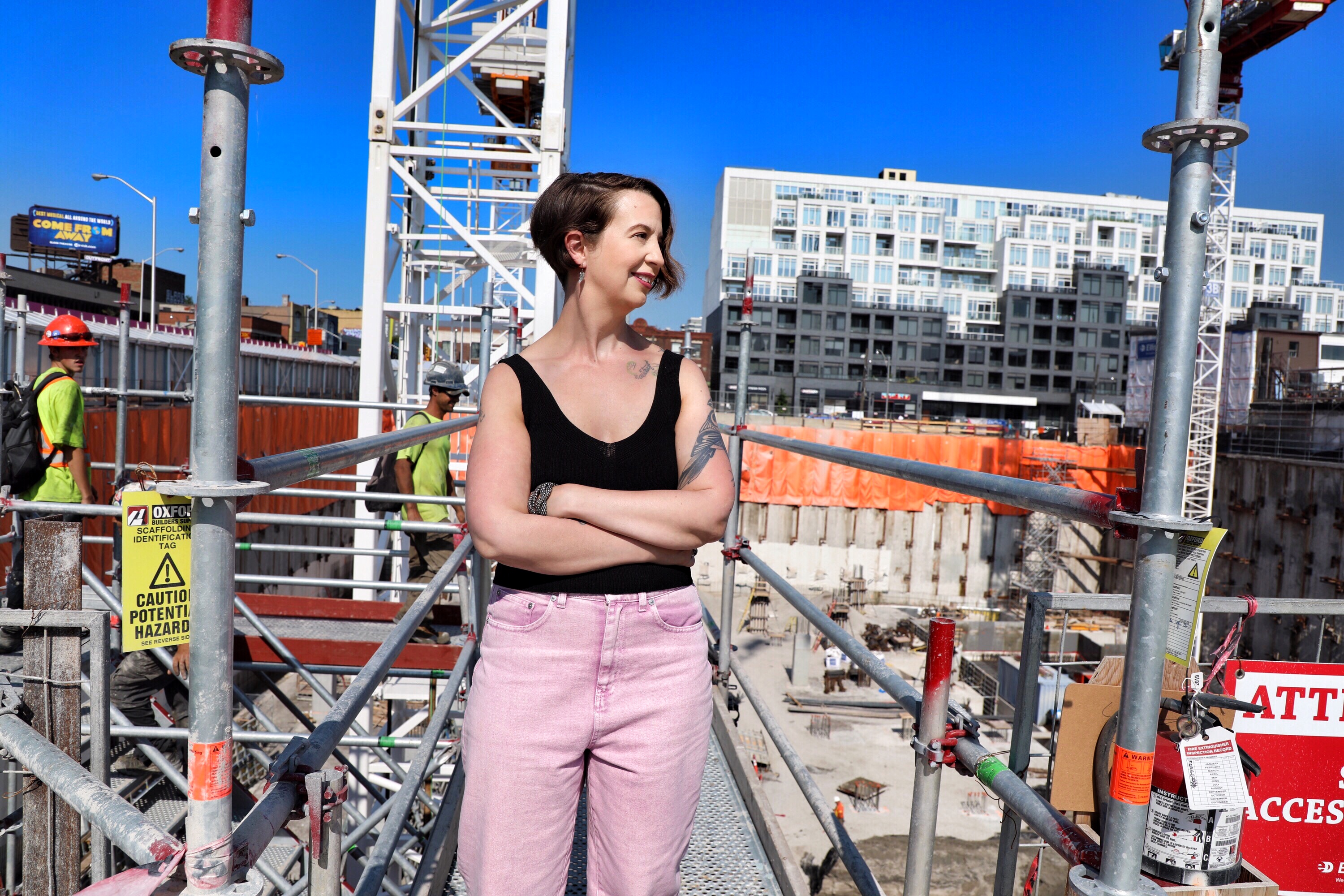
Leslie Kern. Credit: Mitchel Raphael-Kern
Last month, Living Streets held their annual UK Walking Summit, where we explored how we plan streets ‘fit for the future.’ As a feminist geographer, what improvements and changes would you most like to see in towns and cities?
LK: We need to prioritise care and attend to human-scale needs and experiences, especially in the context of aging populations, climate change, and the need to support diverse communities. I would like to see more car-free streets where pedestrians and cyclists can move safely and freely, supported by reliable, green public transit that connects people across longer distances.
Planning should also better reflect the realities of caregivers, who often travel at different times, in different ways, and with different responsibilities than standard 9 to 5 commuters. As climate change intensifies, creating 'cool streets' that provide shade, cool mists, and relief from urban heat will also be increasingly important.
Ultimately, realising a more inclusive vision for our cities requires diverse leadership and meaningful community participation, particularly from groups that have historically been excluded from planning and design processes.
About the author
Melissa Montague
Melissa Montague, Communications and PR Coordinator
[email protected]