
Keep our pavements safe - for all
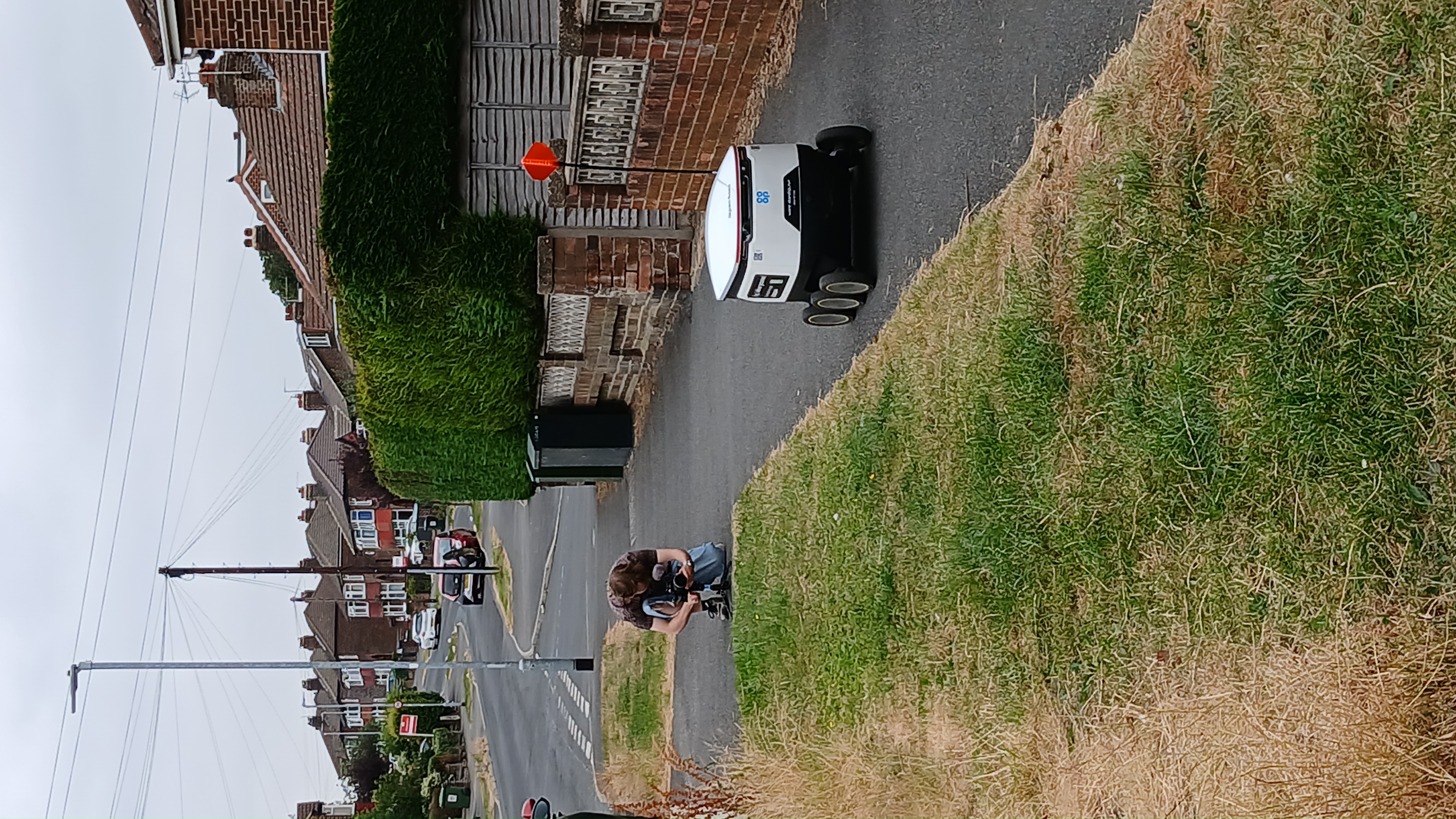
Emily Green is a youth disability rights advocate. She wants to ensure that accessibility is no longer an afterthought but a key consideration in the makeup of our streets. She joined Living Streets recently to appear in our upcoming 'Pavement Overload' campaign film. Here's why.
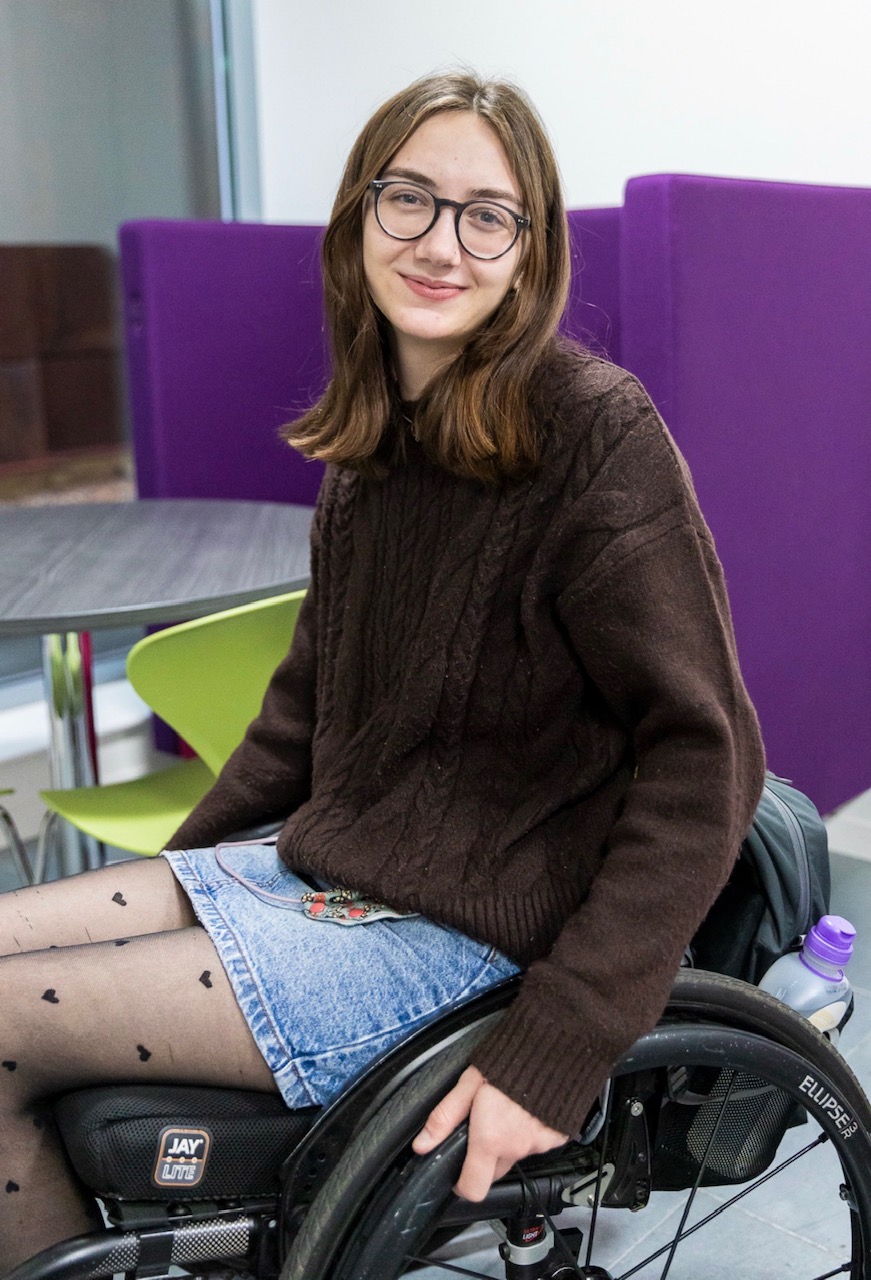
As a young wheelchair user, it's not uncommon for me to face barriers when accessing my local area and beyond. Bins block pavements, cars park over paths and dropped kerbs are often lacking. Things as simple as going into town with friends, collecting some shopping or walking my dog can sometimes turn into a mission to find a route that is genuinely safe for me to follow.
My frustration led me to join the Whizz Kidz Youth Board, a group of 12 young wheelchair users from across the UK. We are all equally passionate about ensuring that accessibility is no longer an afterthought but instead a key consideration. Our work spans across all sectors and allows us to use our own experiences to work towards creating meaningful change for young wheelchair users.
Last month, I was invited down to Leeds to take part in some filming for ‘Pavement Overload’ – Living Streets campaign focussed on the impact of delivery robots on the communities they are in. As delivery robots haven't (yet) been introduced in my city, I came into the process with a rather limited perception of the challenges their implementation may cause. However, this quickly changed…
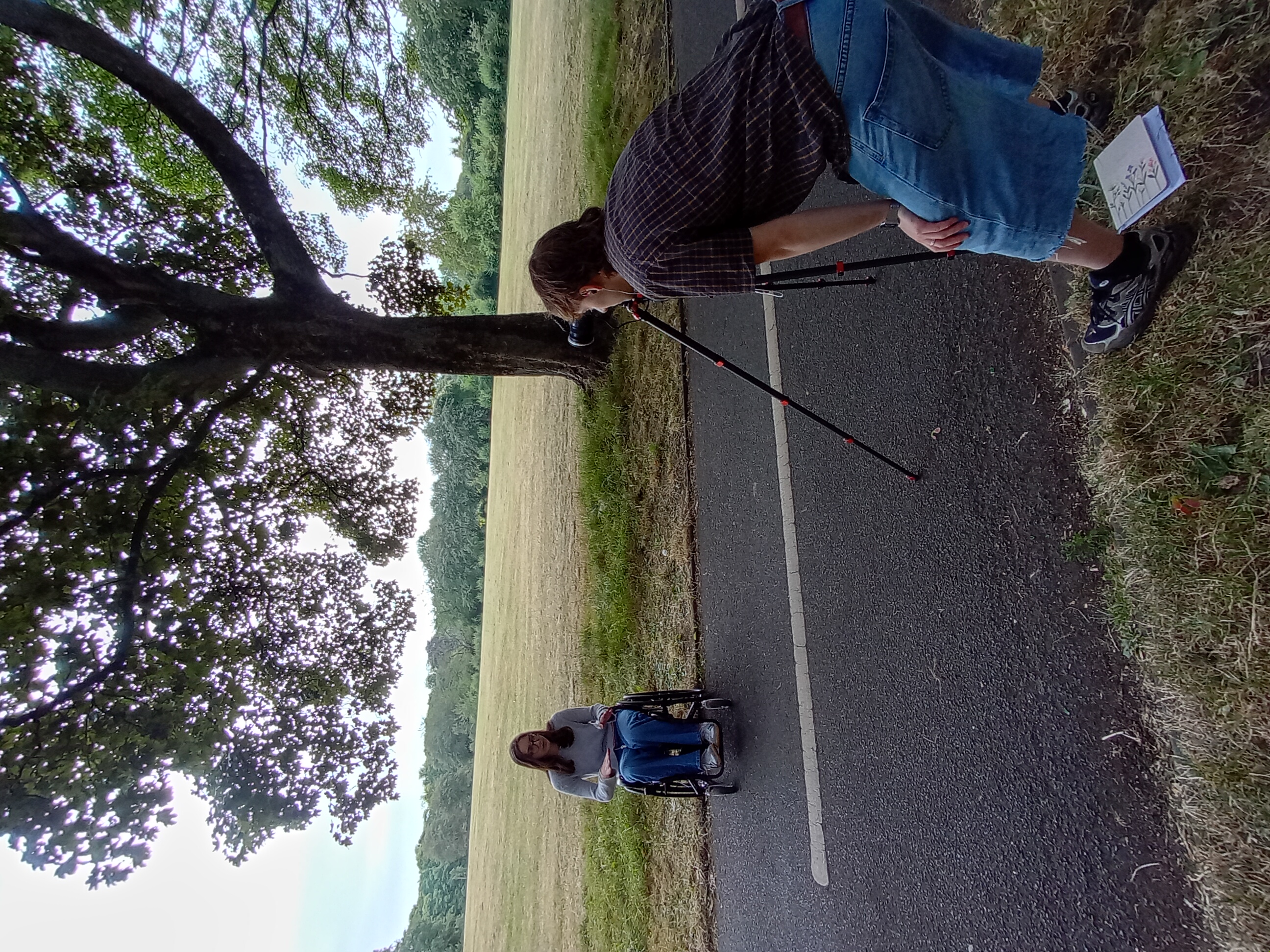
Emily on camera in Leeds
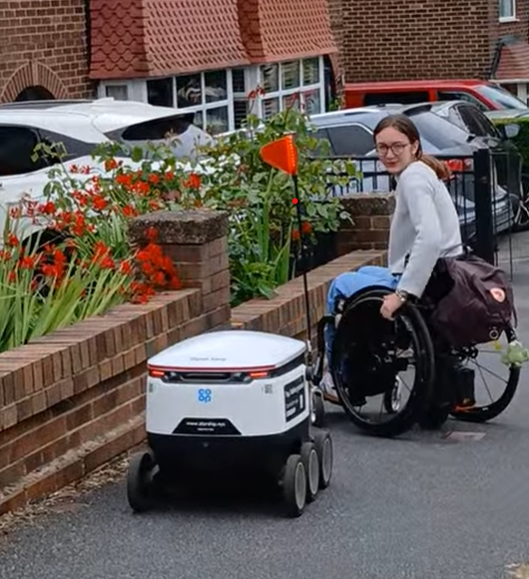
My experience with the robots
My first encounter with a delivery robot saw it crash, at a rather alarming pace, into my wheelchair. Although my chair and I came away physically unharmed, I felt that my personal autonomy had been invaded… by a machine. Pedestrians deserve to be able to get around with dignity and independence, without the fear of injury or damage – is that possible with such hazards running freely about pavements and roads? Unfortunately, another robot later collided with my chair a second time, again re-enforcing my concerns around the safety of residents in areas that delivery robots currently roam.
While I recognise the potential for delivery robots to assist people who need to shop and are unable to leave their house, I don't think that the safety of pedestrians should be compromised in such an effort. My short time spent in the presence of the robots highlighted several concerns for all pedestrians (not just young wheelchair users, but other mobility aid users and prams too), which I believe policymakers should consider moving forward.
For wider context, I use a manual wheelchair, with a power assist for longer distances and steeper inclines. While this has been transformative to my daily life and allows me far more freedom, my power assist means that I travel at a set speed and may take slightly longer to stop than someone walking. My experiences, as highlighted above, suggest that the robots haven't been trained to safely navigate all mobility aids. I could certainly imagine that such caution can be extended to other everyday items regularly used on pavements, like children’s scooters and buggies.
A barrier to independent mobility
My wheelchair is my only way to get around self-sufficiently, so even the possibility of it being damaged is a massive worry to me. There are around 75,000 young wheelchair users across the UK and we all deserve to be able to get around without another prospect of inaccessibility. Wheelchairs are incredibly expensive and repairs can take a very long time, impacts which shouldn’t be ignored – a broken wheelchair can leave children unable to access education and have a detrimental impact on their existing health conditions.
Delivery robots are clearly problematic. They, like wheelchair users, rely on dropped kerbs to successfully navigate the transition between path to road. Therefore, it's likely that wheelchair users living in areas where the robots are used will encounter one another on a regular basis, thereby increasing the chance of accidents occurring. Additionally, something as common as bin collection day could become even more complicated when delivery robots are involved – as pedestrians then face the challenge of navigating more than one obstacle.
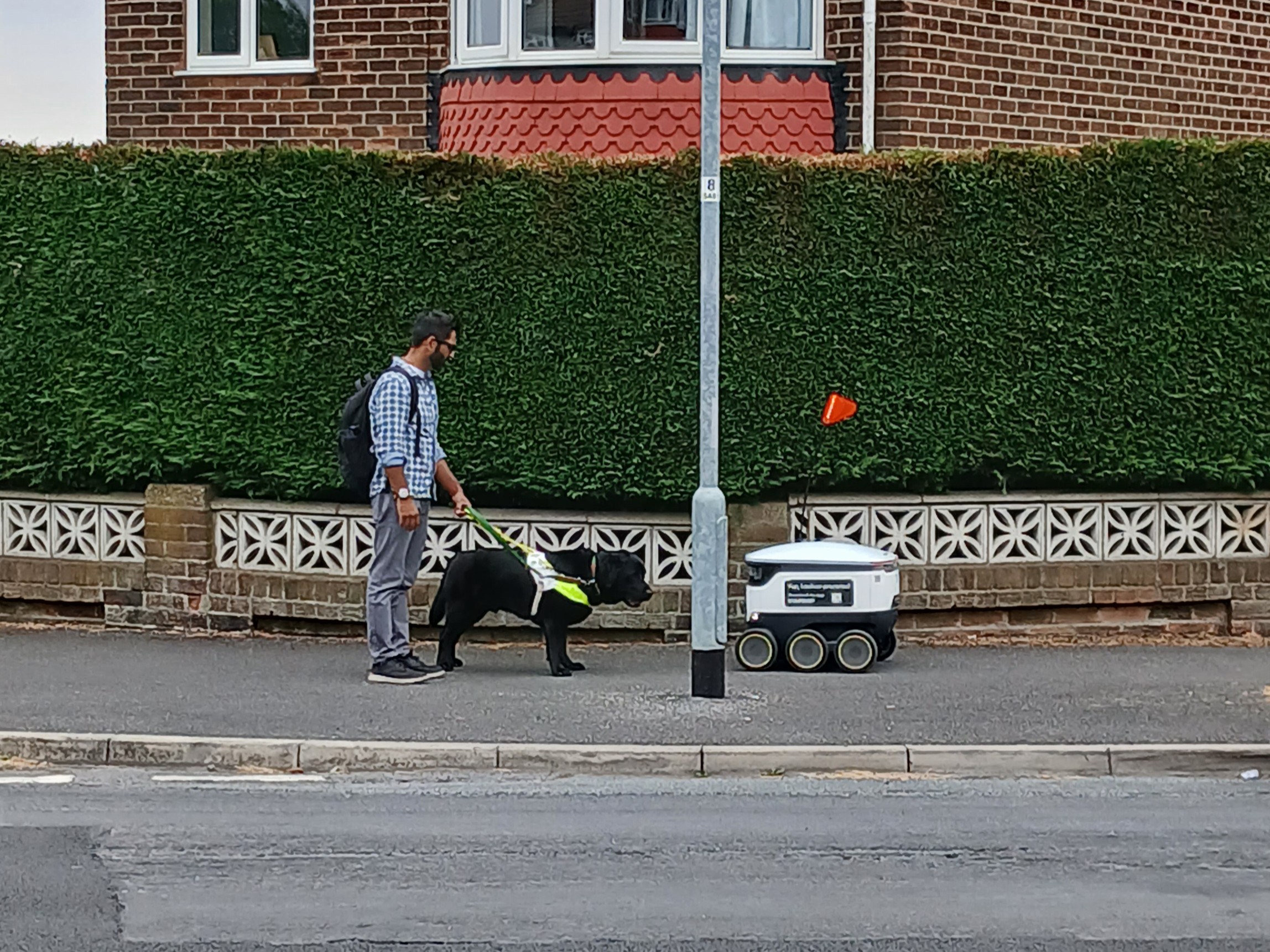
The delivery robots also can cause conflict between visually impaired pedestrians and their guide dogs'
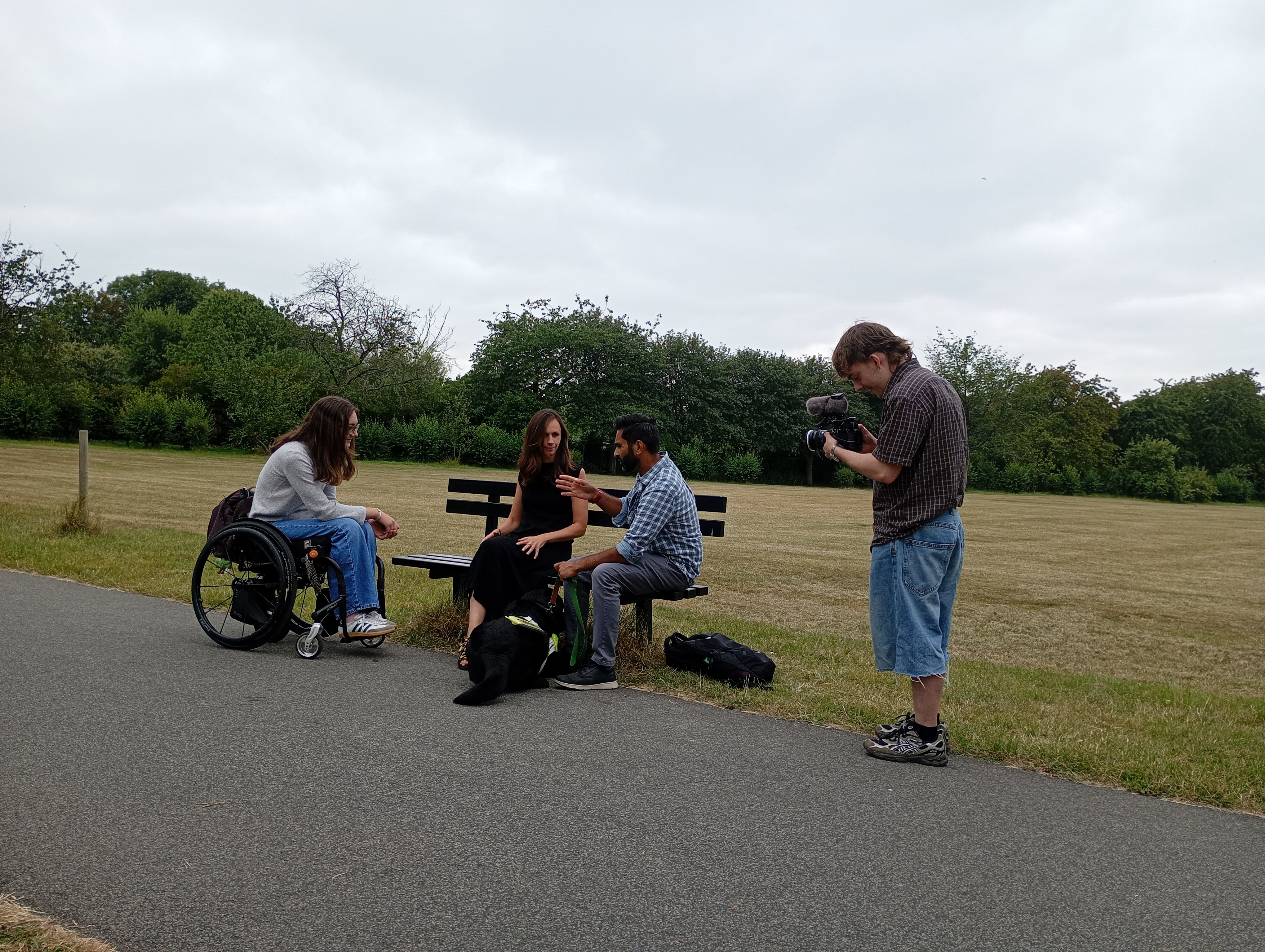
From left: Emily, Tanya Braun (Living Streets Director of External Affairs), Quark (Guide Dog), Dr Amit Patel (Living Streets Trustee), Henry Wolff (Filmmaker)
Next year, I will be moving away from home to study at university, which brings a whole host of new considerations and route changes. As a wheelchair user, I spend much of my time planning routes in advance, although it's currently impossible to know where robots are deployed in their respective areas. My involvement with the campaign has really made me think about technology’s potential – in good and bad ways. And while some recent advancements, like the step-free option on Apple Maps, make a positive difference to my daily life, I'm genuinely concerned that a national delivery robot implementation could hinder my independence. In some international locations, including Toronto and Pittsburgh University, delivery robots have been banned – proving that their convenience comes at a cost too great to risk.
The government is yet to introduce legislation specifically permitting their use on pavements or to clarify the legal status of delivery robots. I believe that the work surrounding ‘Pavement Overload’ is vital to ensure the safety of all pedestrians is considered in their upcoming decisions.
About the author
Emily Green
Advocate, Whizz Kids